Posology, part 16
Accidental homœopathy in crude (“pharmacologic”) dose

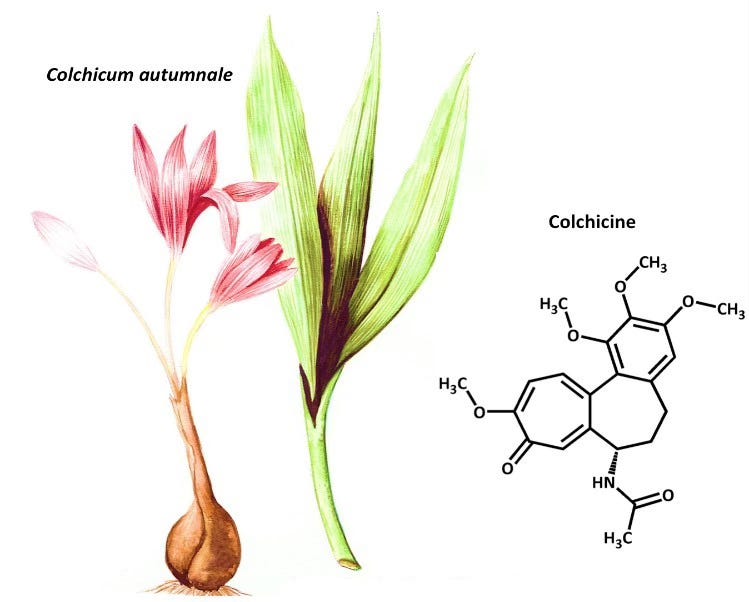
I’m fond of relating the incident of a conventional physician colleague presenting, at grand rounds at the local hospital, a case of pericarditis with tapenade (pericardial effusion compromising cardiac function) that he’d successfully treated with colchicine in mg dose (2mg, followed by 1mg daily). He recoiled when I commended him for practicing good homœopathy (tho a homœopath would more likely have used the better characterized root of Colchicum autumnale than the isolated alkaloid, and would have employed more highly attenuated doses). This was far from an isolated event. Colchicine is accepted in conventional practice as the first-line treatment for acute pericarditis, as well as for gout, familial Mediterranean fever, and Behçet's disease, and has recently been adopted to treat atherosclerotic disease, all inflammatory diseases that can easily be seen to bear similitude to the inflammatory pathogenesis of Colchicum autumnale in serous membranes and endocardium, and to the similar but more limited & less well characterized pathogenesis of the alkaloid colchicine, isolated from its root. It was actually from observing historical cures obtained with pharmacological doses by “old school” physicians that Hahnemann came to his discovery of the principle of similars, with many such cures detailed in a preface to the 1st edition of the Organon (sadly omitted by Wheeler in his English translation).