
Fats

Before examining the role of fats in the diet, it’s first important to examine the various fats involved in metabolism & potentially in the diet. Often this is merely reduced to saturated animal vs unsaturated plant fats, but the issue is far more complex than saturated/unsaturated, animal/plant, seed/non-seed oils.
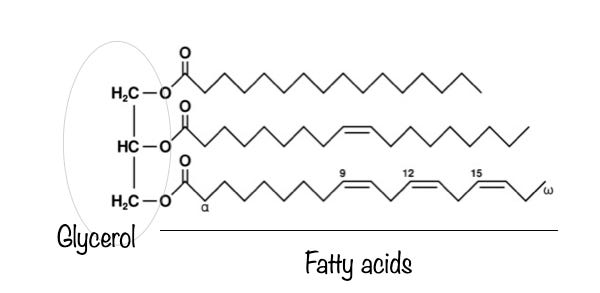
Fatty acids are typically available in the diet esterified to glycerol as triglycerides (triacylglycerols), or to cholesterol as cholesteryl esters.
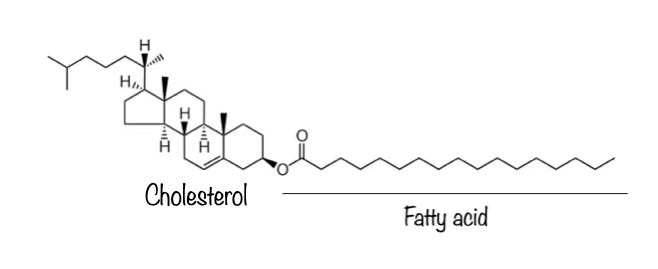
Approximately 1/3 of dietary cholesterol is in the form of cholesteryl esters, most commonly cholesteryl palmitate, stearate, oleate, or linoleate.
Triglycerides (triacylglycerols) are cleaved to 2-monoacylglycerol and free fatty acids by the sequential activity of salivary lipase in the mouth & esophagus and pancreatic lipase in the duodenum, cholesterol esters to free fatty acids and cholesterol in the duodenum by pancreatic cholesterol esterase, with bile acids acting as surfactants to emulsify dietary fats and form micelles in the gut, which release lipids to cross the enterocyte membrane via passive diffusion or in some instances with the assistance of membrane transporters. Hydrophobic long-chain fatty acids (over 6 carbons), 2-monoacylglycerol, and cholesterol are absorbed in the jejunum and ileum, and transported in chylomicrons via the thoracic duct to the general circulation at the junction of the left subclavian vein and left internal jugular vein. Triglycerides and cholesteryl esters remain as free fatty acids and cholesterol, or are re-assembled in the enterocytes or liver from free fatty acids and 2-monoacylglycerol or cholesterol, respectively.
We might classify fats into several classes:
