
Bread Baking Supplies & Resources

Bread recipes & resources
Some of my favored sources of bread recipes & bread making techniques:
The Tassajara Bread Book (Ed Espe Brown) - my bread bible
Laurel’s Kitchen Bread Book (Laurel Robertson, Carol Flinders, Bronwen Godfrey) - also an essential. Excellent extended discussion of ingredients & techniques.
Flour Water Salt Yeast (Ken Forkish)
Emphasis on traditional “artisan” Italian & French bread baking; Ken runs a wood-fired bakery in Portland, Oregon, where I used to live; his pizzas are beyond belief (if you wish to make the best pizza this side of Naples, check out his book The Elements of Pizza).Artisan Bread in Five Minutes a Day (& several spin-off books) (Jeff Hertzberg , Zoe Francois)
Recipes & techniques for no-knead, cold (refrigerator) fermented breads. Innovative approaches for nutritious breads with minimal effort.
There’s been a flourishing of information on sourdough baking inspired by the recent COVID pandemic. I’m less attracted to or familiar with sourdough, but am looking to expand my vistas. More on that to come.
There are some excellent resources on YouTube; channels I’ve found particularly helpful are:
Flours, grains, supplies:
Breadtopia (Fairfield, Iowa)
Grains & flours, including gluten-free flour; baking tools & supplies; recipesKing Arthur Baking Company (Norwich, Vermont)
Flours, including gluten-free flours; baking tools & supplies; recipes. Their Artisan Bread Flour is an excellent white bread flour.Bob’s Red Mill (Oregon City, Oregon)
Flours & grains, including many specialty flours & gluten-free flour; baking supplies; recipes. Another good source of Artisan White Bead Flour. When Bob Moore retired a few years ago, he gave the company to his employees; good karma.Granite Mill Farms (Trout Creek, Montana)
Flours & grains; including sprouted & heritage flours (Emmer, Einkorn, Khorasan wheat (Kamut), Spelt, Red Fife, hard white wheat, hard red wheat), all as sprouted or unsprouted flours; recipes.
I’m particularly fond of their sprouted Red Fife, Sprouted Emmer, and Sprouted Hard Red Wheat flours. If I had to limit myself to one whole-grain flour, it’d be their sprouted Red Fife.Sunrise Flour Mill (North Branch, Minnesota)
Flours & baking supplies. I’m fond of their Heritage Bread Blend Flour; a white flour blend of Turkey Red and White Sonora wheat.Jovial (North Stonington, Connecticut)
Whole wheat & white Einkorn flour, recipes, Einkorn cookbookCentral Milling (Petaluma, California)
A variety of high quality bread flours
Barton Springs Mill (Dripping Springs, Texas)
Good source of a variety of whole grain & white bread flours, including Einkorn, Emmer, Spelt, Red Fife, Rouge de Bordeaux, & others.
In Skowhegan, Maine; locally grown (to me) organic whole grain & white flours; I’ve used their Red Fife, Spelt, Whole Wheat, Whole Wheat Pastry, & all-purpose white flours; they also sell Einkorn, Khorasan wheat (Kamut), Rye, Øland Wheat, Graham, Buckwheat, Corn, & Multigrain (heritage wheat, spelt, rye, corn, and buckwheat) flours.
Doves Farm (UK; available on Amazon)
A variety of organic whole grain & white flours, including rye & some ancient grains
There are many more small mills selling specialty & heritage grains & flours; a quick Google search will turn up a selection; I’ve had good success with those above
Scratch Foods (Phoenix, Arizona)
Yeast, Diastatic barley malt powder, vital wheat gluten
Airtight containers for flour storage
I like these; tight airtight seal, strong latch, a (removable) leveling insert; holds a 5lb bag of flour, pack well on pantry shelves, less expensive than others I’ve found. For smaller quantities, canning jars work fine.

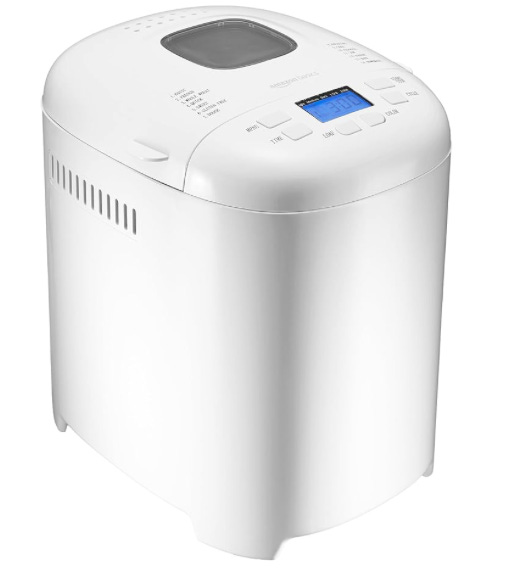
I’m using an inexpensive Amazon Basics bread machine for much of my dough prep due to issues with my left hand & shoulder, with an extra bucket & paddle reserved for gluten-free bread, but mostly bake in the oven; the machine does a decent job for kneaded recipes, & is handy for a basic inelegant loaf baked directly in the machine. May be loaded up for a 1.5-2 lb loaf in the evening with time delay to wake to the smell of baking bread. Sweet. (tho the resulting loaves aren’t much to look at). There are better (& pricier) bread machines out there; if someone wishes to send me a Zojirushi, it’d find a good home 😉.
For dough prep without the option of in-machine baking, a dough machine or heavy-duty stand mixer will serve. Lehman’s sells a hand-cranked dough mixer that looks pretty snazzy.
I’m using a small Breville countertop oven, which suffices nicely for 1-2 standard loaf pans or a 6” bread cloche; as the interior height is only 6”, it won’t permit use of a larger cloche or Dutch oven. I’m considering upgrading to a slightly larger model to accommodate a larger cloche or Dutch oven
Indispensable tools
Kitchen scale(s)
I have 2 scales with ranges from 2 grams - 5000 grams, for weighing flour, water, & other bulk ingredients (one will do; I thought one was broken & bought the second before I discovered the problem was a bad battery), and a small scale with a range from 0.01 - 220g for minor ingredients. Weight measures are far superior to volume measures (cups), especially for flour, and permit easier scaling of the size of a recipe.
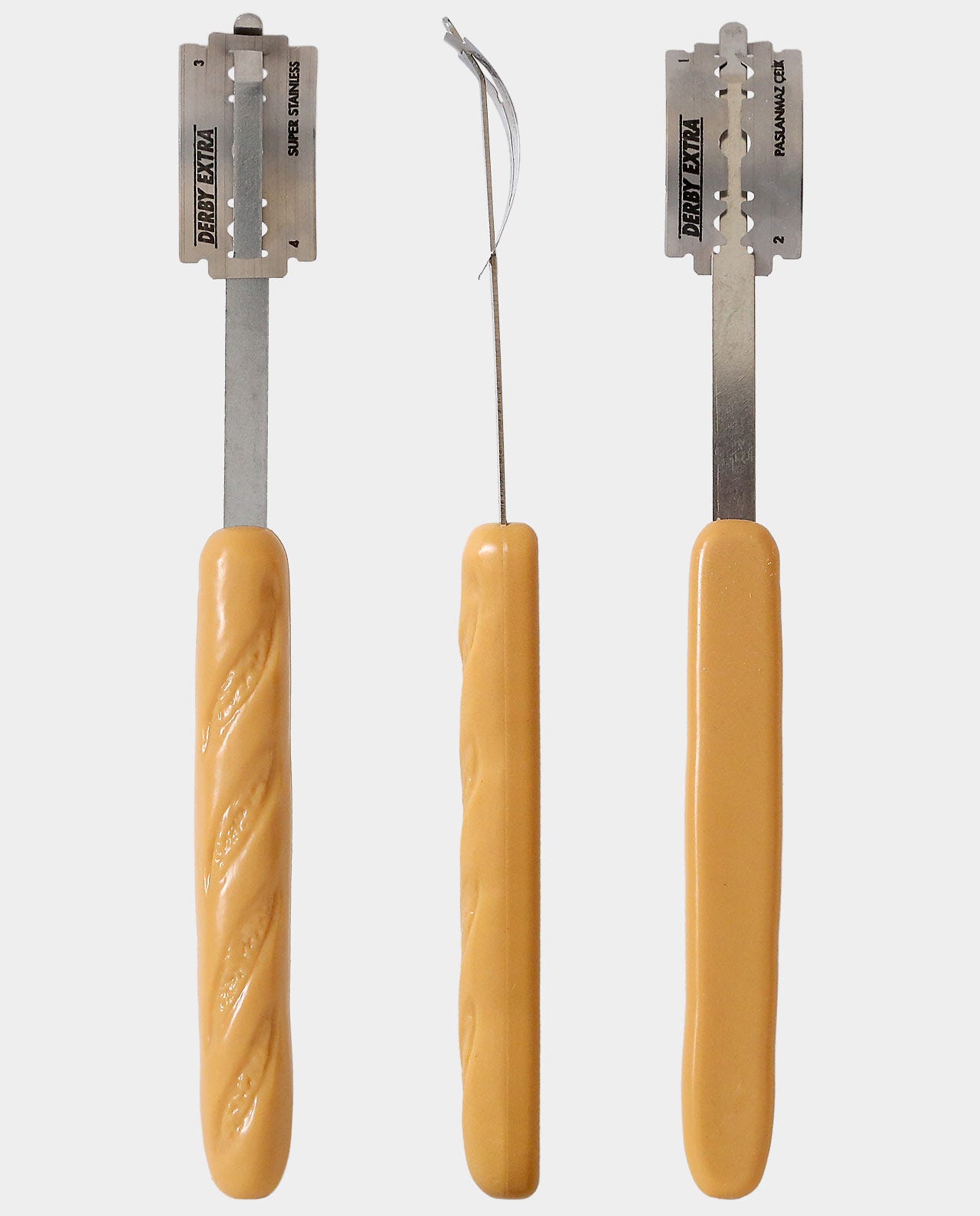
Bread lame
A hand-held razor blade or craft knife with sharp blade will do, or if you’re totally into Paleo, go backpacking on South Sister near Bend, Oregon & bring home an obsidian chip for your Emmer or Einkorn breads; but a wicked sharp bread lame (pronounced “lahm”) makes both functional & decorative scoring easy & keeps your fingers away from the blade. Scoring can be decorative, but is necessary to permit the loaf to open up in the oven.
Proofing basket (banneton)
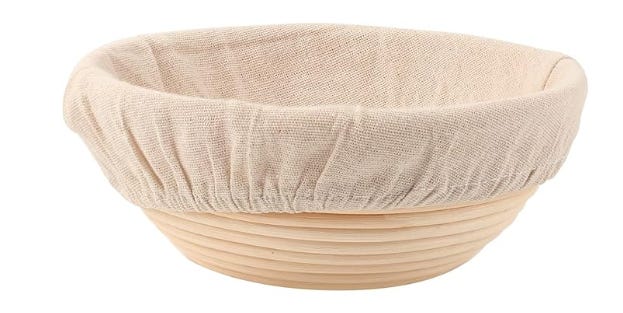
I use rattan baskets with unbleached muslin liners; dusted with fine white rice flour. Round for boules, oval for battards. One for each size/shape of loaf you’re making.
Plastic & muslin “shower cap” bowl & banneton covers
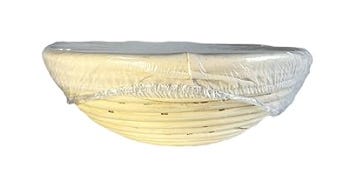
Reusable, & much easier to use than plastic wrap. Come in several sizes to fit jars, bannetons, & bowls of various sizes. The plastic ones are handiest for proofing in bannetons, the muslin ones on mixing bowls; spritz the muslin ones with water to prevent drying of the dough; the plastic ones can be lightly oiled to prevent sticking to high hydration doughs. Muslin towels & plastic wrap will do in a pinch, but these are inexpensive & simply elegant.
Baking cloche
A cloche provides an oven inside the oven for concentrated heat & retention of steam, important for good oven spring & crust development.
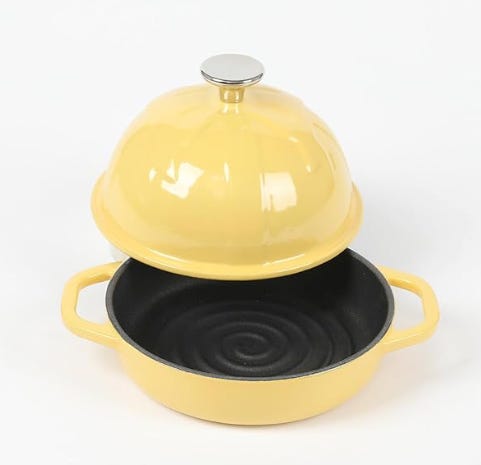
I use a 6.3”/13cm diameter enameled cast iron cloche from HAWOK for small boules,
And a 9 x 6” oval enameled cast iron cloche with integral silicone mesh sling from Sxmprail for small battards.
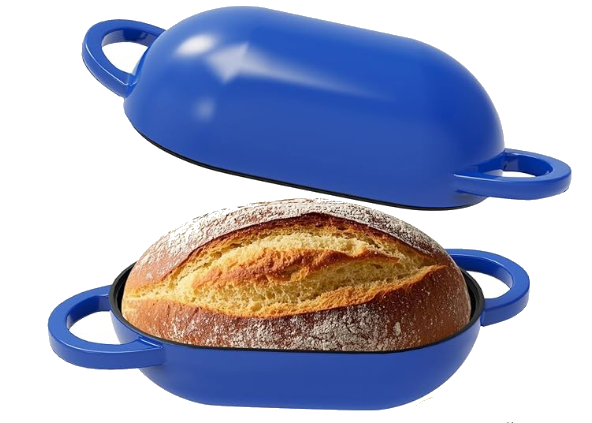
These fit in my tiny oven; if you’re not limited by oven size, larger cloches, a 4-5 qt Dutch Oven, or a baking steel or stone with baking shell will do.
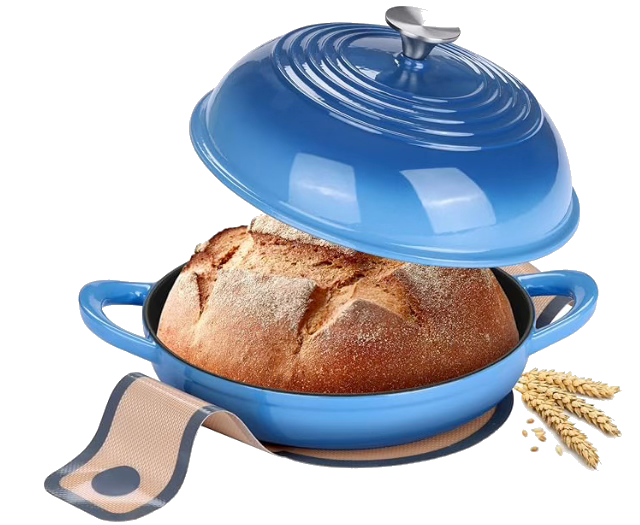
After much searching, I’ve finally found a large cloche that will fit in my tiny oven, Only 5.1" high 10” dia., 13.5” wide with handles. Will fit a 9” boule. I need to unscrew the top knob to slide it in my oven, but the screw is solidly in place in the lid, so the knob is easy to reattach to remove the lid.
I’ve read of using plastic oven bags, the kind used for roasting turkeys, in place of a cloche; haven’t tried it but sounds intriguing.
Bread sling
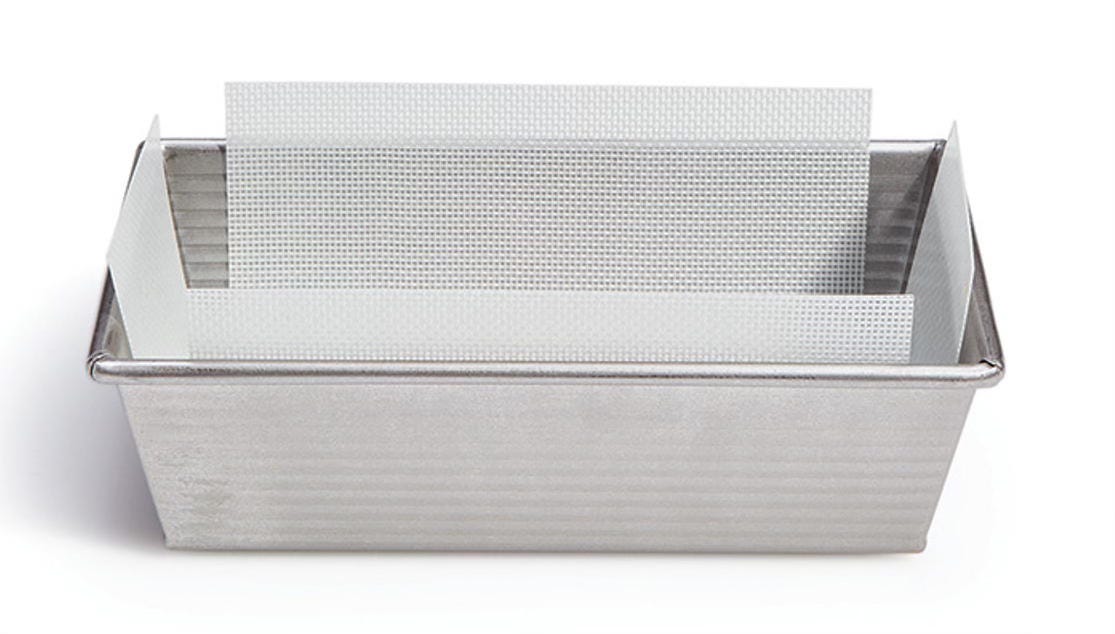
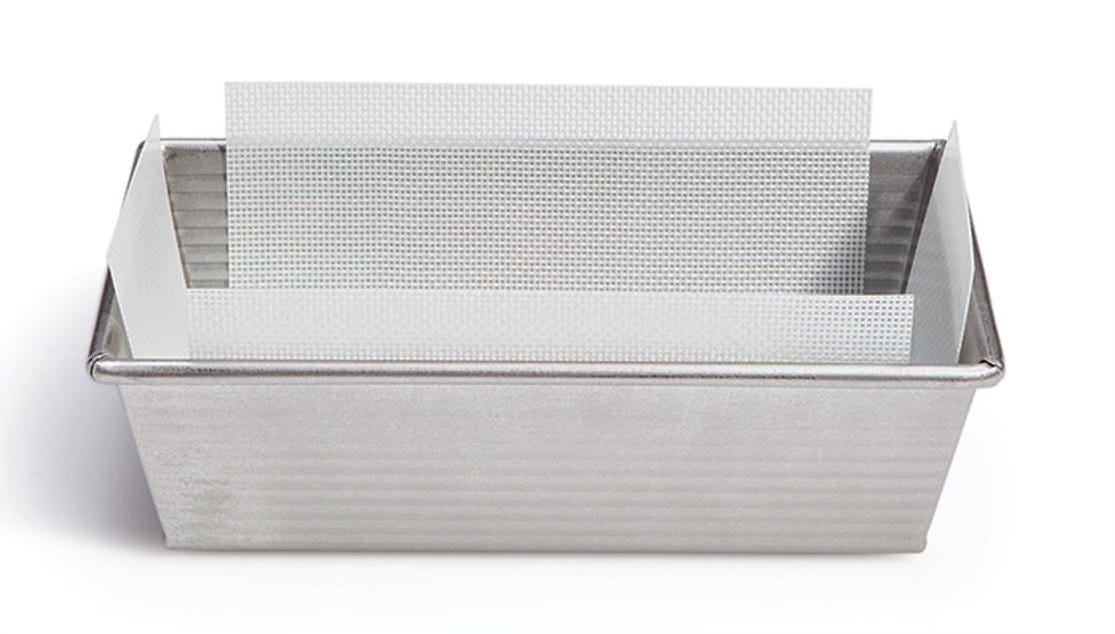
For transferring the dough from banneton to the preheated cloche, and for removing the baked loaf from the cloche. I just cut from unbleached baking parchment (can be reused 2-3 times with care), but reusable silicone slings are very nice. I can’t find one to fit my small cloche, but have one for the larger, 10” cloche. Silicone loaf lifters can serve a similar purpose in a standard loaf pan (note - silicone slings & lifters should not be trimmed to size, as they contain a fiberglass core safely sealed away in silicone that you don’t wanna expose).
Bread pans
Sometimes I just want a standard sandwich loaf; a Pullman pan with silicone loaf lifters (or baking parchment in a pinch) serves well, as does a standard loaf pan to fit a 1.5-2 lb loaf.
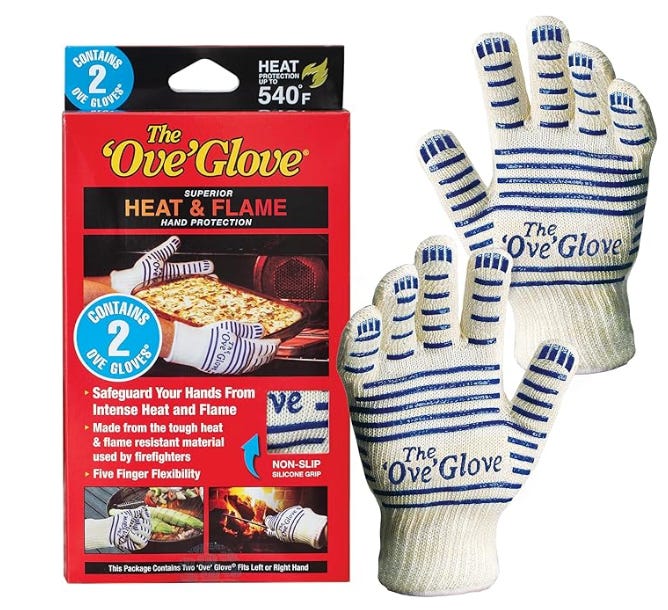
Oven gloves
You’ll be handling heavy cast iron or ceramic cloches or Dutch ovens at 450-475°F, so get good ones (gloves, not mitts) that are comfortable to wear & give you control over what you’re handling, & that protect your wrist as well.
Spray bottle
Steam inside the cloche is essential for good oven spring & crust development. There are a number of ways this can be accomplished, but a good spritzing of water before baking is perhaps the easiest & most versatile.
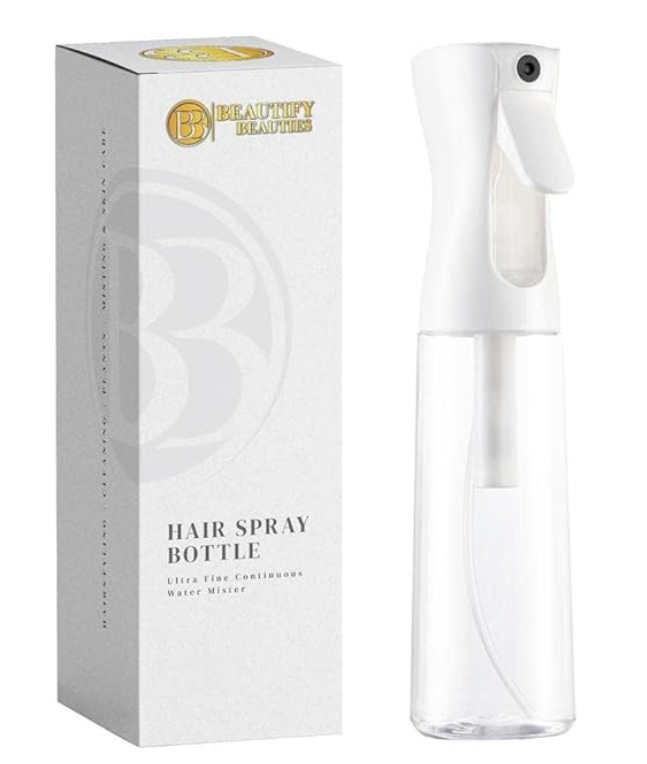
This is an inexpensive spray bottle that does the job well. Also useful for moistening muslin bowl covers & towels to prevent drying.
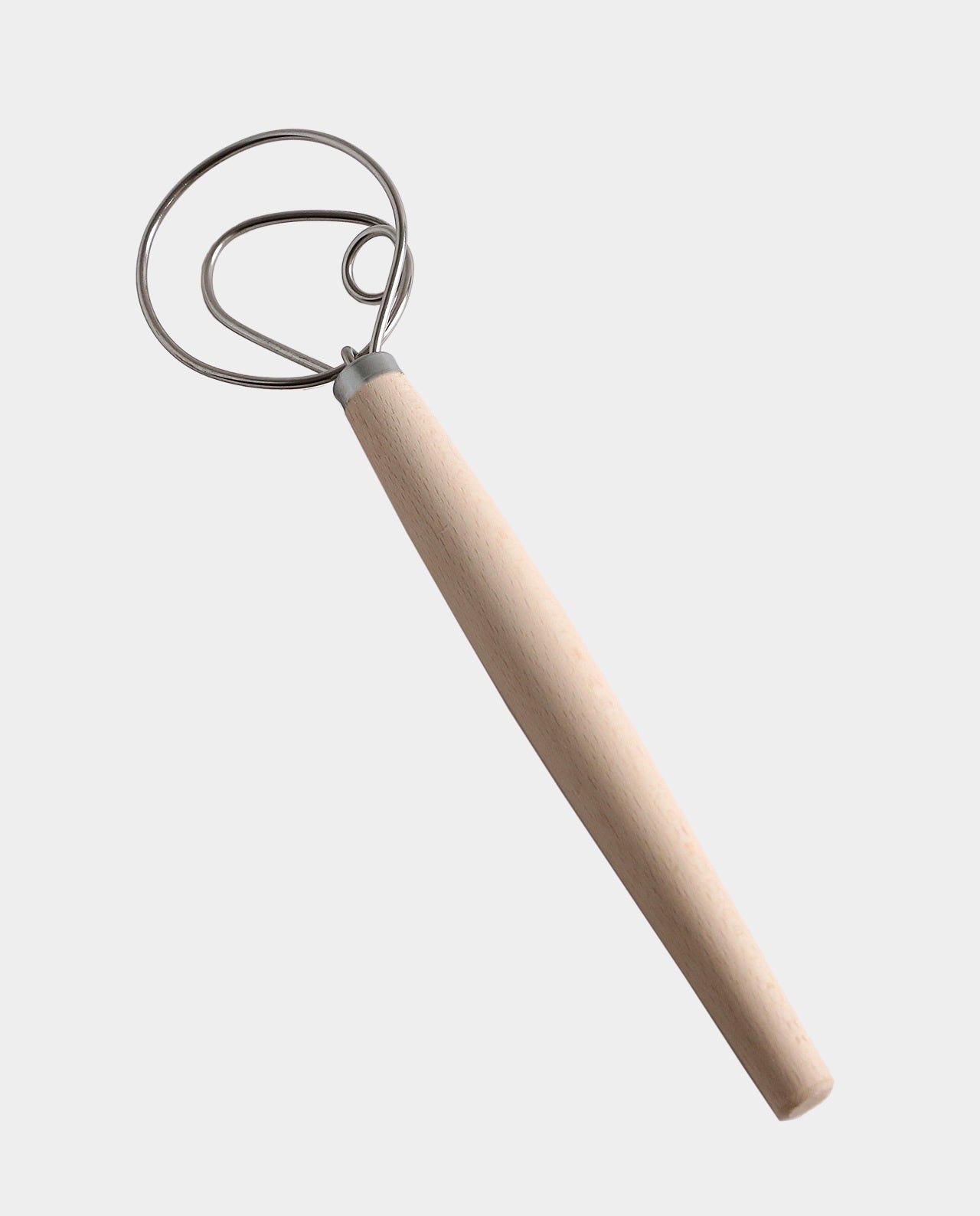
A Danish dough whisk comes in especially handy for mixing autolysed dough & high hydration doughs
Silicone spatulas

A thin, long-handled one for Poolishes & sourdough jars; and a standard kitchen spatula for bowls.
Instant read Digital probe thermometer
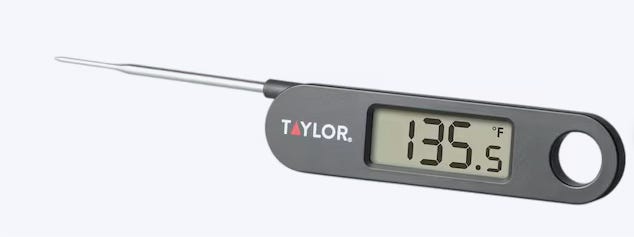
Knowing the temperature of your dough can be important, especially with machine kneading. This easily allows me to check the temperature of my kitchen, of water & dough, as well as the interior temperature of a baked loaf.
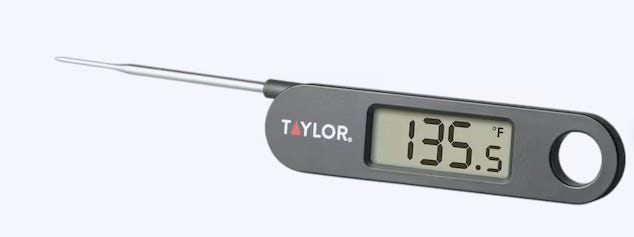
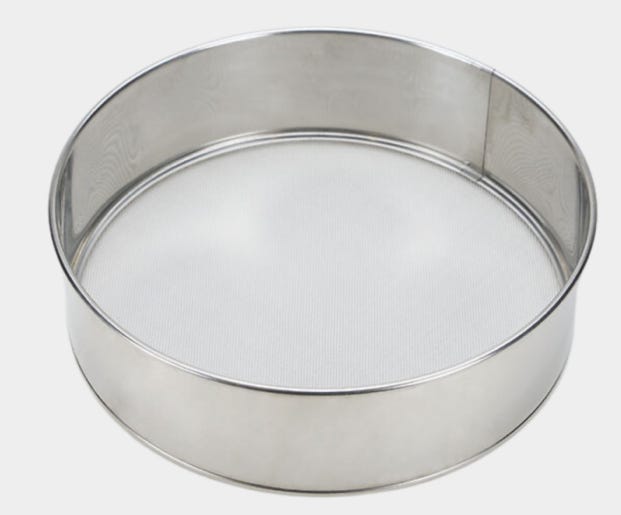
Sometimes it’s nice to use bolted flour - sifted to remove a portion of the bran, while leaving the germ. This screen fits over a 9.5” dia. bowl. A second sifting with a 50 mesh screen will provide super fine (00) flour, but I’ve found a 40 mesh screen to meet my needs well.

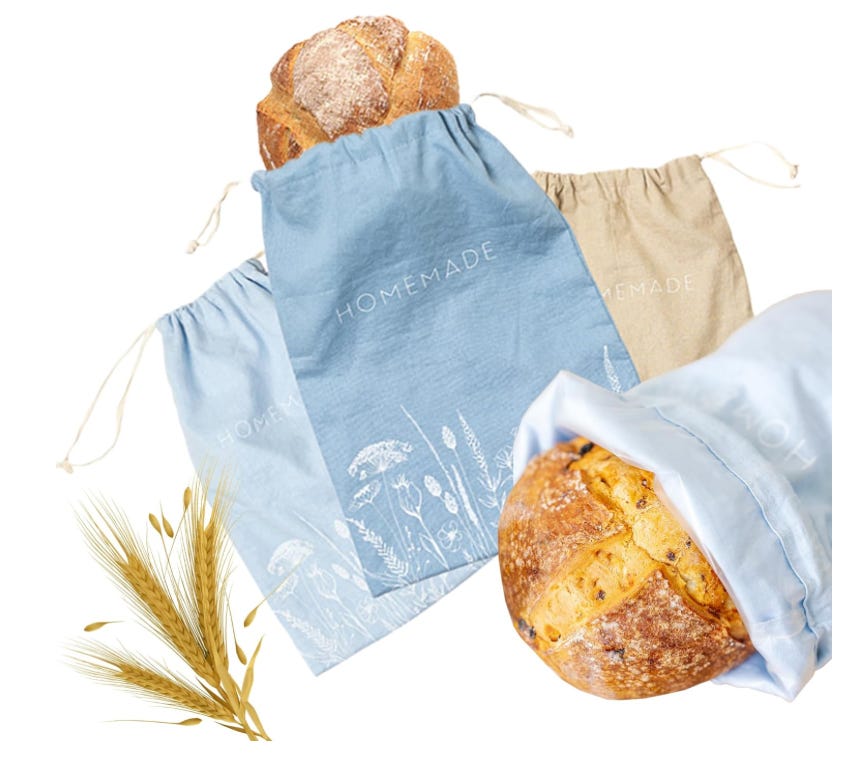
Bread bags, to store your lovely bread & gift it to friends. I like these lined linen bags for keeping bread fresh. Easy to hand clean, & as pretty as what’s inside (they should make some with a bold red bar across the wheat image for gluten-free bread; I’ll suggest it).
Specialty ingredients
Instant yeast
Fleishman’s & Red Star from the local grocery will do, but I buy Scratch Foods’ Instant Rapid Rise Yeast in bulk (8oz. resealable bags); store sealed in the freezer. Bob’s Red Mill is a good source for active (non-instant) dry yeast in bulk.
Diastatic (enzymatic) malted barley powder
Tiny amounts (0.5% of total flour weight, or 1/2-1 tsp to 3 cups flour) catalyze the conversion of amylase in the wheat to free maltose & glucose, feeding yeasts in fermentation & proofing & contributing to crust development; essential in bagels & crusty breads. I use it often. Note - all flours have some diastatic activity; sprouted flours in particular; & some specialty bread flours contain diastatic barley malt flour, check before adding more.
Tiny amounts (0.5% of total flour weight, or 1/2-1 tsp to 3 cups flour) improve the texture and keeping qualities of bread; and provide essential nutrients (phospholipids including choline & phosphatidylinositol) along the way. Sunflower lecithin is a better choice than soy lecithin, as unlike soy lecithin, it’s extracted without solvents. Can also be added to oil, to oil bread pans for easy release.
I use canola oil for greasing pans, & for the kneading surface for sticky doughs; I prefer butter in my doughs. Some recipes call for a high quality olive oil. Latourangelle carries some amazing exotic oils (Avocado, Grape seed, Roasted Pistachio, Roasted Walnut, Roasted Pecan, Roasted Hazelnut, Roasted Almond, Toasted Sesame Seed) as well as high-quality organic canola, sunflower, & olive oils, all expeller-pressed.
You’d think they’d be giving this away, or paying you to take it. But can add this to all-purpose flour or to whole grain flours to improve dough qualities. My flours don’t need it; I’ve only used it in pizza doughs, where it adds amazing strength to the dough.
Unlike diastatic malted barley powder, this is not enzymatic, but is a natural sweetener particularly low in sucrose & fructose, consisting of 76.13 percent maltose, 15.81 percent glucose, 6.03 percent sucrose, and 2.04 percent fructose. An essential ingredient in bagel dough & in the boiling water for bagels, an alternative to molasses in pumpernickel, and an alternative to honey in whole grain breads. Substitute 1:1 for honey, molasses, sugar, and other sweeteners.